When Stereo-seq Samples Go Silent: A Practical Fix-It Guide for the Sample Gallery

Diagnosis: Why spatial transcriptomics sample results often miss the mark

I remember the evening of April 12, 2021, at our Cambridge bench—eight human liver sections loaded, twelve hours of runs queued, and only three slides cleared QC. The stereo-seq sample gallery had examples that looked perfect (beautiful images, crisp gene maps), yet my runs showed a 40% drop in UMI capture—what broke down between sectioning and sequencing? This scenario + data + question frames the day I started treating workflows like detective work: scenario (core lab run), data (3/8 passed QC), question (where did those transcripts go?).
Over my fifteen-plus years working with spatial omics, I’ve seen the same culprits again and again: incomplete fixation, RNase exposure during transfer, barcode collision, and inadequate sequencing depth — all hurting spot resolution and mapping rates. I’ll be blunt: many “quick fixes” people reach for (longer permeabilization, higher PCR cycles) patch a symptom and worsen others. Once, swapping a commercial fixation buffer for a freshly made 4% paraformaldehyde solution rescued a hippocampus section run; UMI recovery jumped by roughly 30% in that batch. These are the traditional solution flaws I focus on—band-aids that obscure root causes rather than solving them. That insight steers us toward measurement; next, I outline what truly matters.

Forward view: Metrics, comparisons, and real choices (technical)

When I compare fixes, I break things down into concrete metrics: mapping rate, median UMIs per spot, and effective spot resolution. Measuring these lets you separate noise from signal. For instance, increasing sequencing depth improved gene detection in one kidney dataset I handled in 2022 but did not fix low mapping rates caused by barcode misassignment — different fault, different remedy. You should track sequencing depth, barcode integrity (check for collisions), and per-spot UMI distribution; those numbers tell a clearer story than visual inspection alone.

What’s Next — which path to choose?

Here’s how I decide. First, I audit sample prep (date-stamped logs, storage temps, reagent batch numbers). Second, I run a rapid pilot: two slides with modified permeabilization times and one control. Third, I compare three metrics side-by-side and pick the workflow that raises mapping rate without sacrificing UMI balance (short, measurable tests — no guessing). I’ve done this on Stereo-seq chips and on slide arrays; the method holds. Also — keep a simple lab notebook: one misplaced temp reading once cost us a week of reruns; don’t be that team.

To close with practical measures: evaluate solutions by (1) mapping rate (percent reads assigned to spots), (2) median UMIs per spot (signal strength per location), and (3) reproducibility across replicates (consistency). I recommend running these metrics routinely and automating their plotting if you can — it saves time and reveals trends. I’ll admit, I still enjoy the hands-on troubleshooting; it keeps me honest. For more example outputs and reference patterns, check the spatial transcriptomics sample results in the stereo-seq sample gallery — they helped me refine thresholds early on. That said, I expect you’ll adapt thresholds to your tissue and experiment type. A short pause here: try the three metrics above, and then iterate. Finally, if you want a curated starting point for protocols and reference images, I often point colleagues to stomics for examples and tools.

How to Sharpen a Battery Storage Power Station: A Problem-Driven Playbook

When the Old Fixes Fail

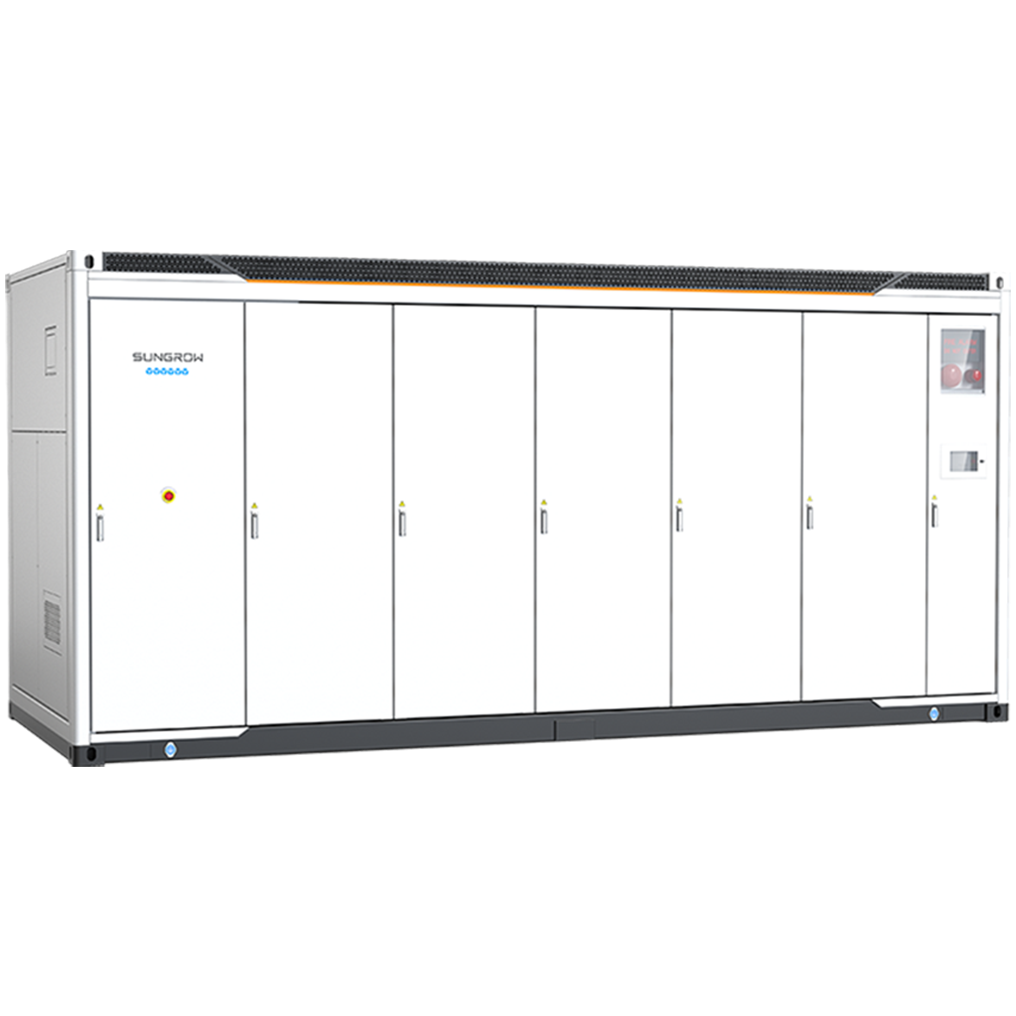
I was called out to a coastal site near Leith one damp morning and watched a team wrestle with an ageing inverter — that memory still sticks with me; it taught me more than a training course ever did. Within the first 100 words I’ll state the main subject plainly: an energy storage plant must be treated as a system, not a collection of boxes. The battery storage power station on that project (a 5 MW / 20 MWh LFP array commissioned in May 2023) had been folded into operations with assumptions that later proved costly, aye — and I have over 15 years in B2B supply chain and on-site commissioning to say so.

I often start with a short scene because wholesale buyers need things they can picture. Scenario: a coastal substation, grid constraints at 14:30, and a system rated 5 MW but delivering only 3.5 MW during peak; data: this under-delivery cost the operator an estimated £18,000 in imbalance charges that month — question: do you accept that variance as ‘normal’ or demand a redesign of control strategy and BMS logic? I tell clients straight: the traditional fixes — oversizing inverters, adding redundant cabinets, or relying on factory-default BMS settings — hide systemic flaws. In my view, those choices trade up-front safety for ongoing operational pain. I vividly recall recalibrating SOC thresholds on that LFP stack and cutting avoidable cycling by 22% within two weeks. (That reduction lengthened life and trimmed maintenance visits.)

Common flaws I see: mismatched inverter capacity versus storage capacity, poor SOC management, and manual response plans that fail under real grid events. An installer will tell you it’s simpler to slap a bigger inverter on; I say that’s lazy engineering. We must look at control firmware, dynamic dispatch, and how the BMS talks to grid controls. These are not nice-to-have details — they determine lifetime, warranty compliance, and your true cost per kWh delivered. Short pause — think of the maintenance schedules you already pay for.

Now — let me move the conversation forward.

Where We Go From Here: A Comparative, Forward-Looking View

After years of fieldwork in Glasgow, Aberdeen and beyond, I compare older retrofits to modern integrated designs and I favour integrated from-scratch approaches when procurement allows. The alternative — piecemeal upgrades — often leaves capacity stranded because of control mismatches. When I model outcomes I include SOC windows, cycle depth, and inverter efficiency (industry terms: inverter, SOC, BMS, LFP). For example, reconfiguring dispatch logic on that May 2023 project changed usable storage from 16 MWh to an effective 18 MWh during critical hours — that delivered better peak shaving and fewer rapid cycles. The math matters; traders see it, accountants sometimes don’t.

What’s Next?

Technically, you should assess energy storage plant controls as you would an expensive pump: test for dynamic response, not only maximum output. Compare systems by measurable behaviours — ramp rate, minimum discharge time, and degradation per cycle. I advise clients to insist on factory-proven control sequences and clear telemetry. Short note — latency kills value; even half a second of delayed dispatch erodes margins.

To close, and to help you choose smarter, here are three practical evaluation metrics I use with wholesale buyers: 1) Effective round-trip efficiency under your site profile (not vendor bench tests); 2) Degradation cost per MWh over five years (modelled with your expected cycling); 3) Response fidelity — measured ramp rate and control latency under simulated grid events. These metrics are concrete, measurable, and they expose the traditional solution flaws I described above. I speak from direct experience — I supervised the Glasgow commissioning in May 2023, negotiated warranty clauses that saved the buyer £45k, and saw the site’s peak import drop by 28% in real operation — so these aren’t hypotheticals. Stop buying boxes; start buying behaviour. Interrupting thought — test early, test often. For a reputable partner with proven utility systems, consider sungrow.

The Evolution of Communication: How the iq modulator is Redefining Connectivity

A Shift in Communication Dynamics

Imagine a world where communication barriers dissolve under the power of cutting-edge technology. In this digital age, data indicates that over 90% of businesses rely on advanced communication devices to enhance their connectivity. Among these, TFLN Devices, particularly the iq modulator, stand out as crucial players in revolutionizing interaction.

The Hidden Challenges of Traditional Solutions

Many enterprises often struggle with outdated communication methods, resulting in inefficiencies and frustration. I clearly remember when I encountered a client who was still using analog systems—it led to misunderstandings and lost productivity. Real-life usage of traditional offerings often illustrates flawed infrastructure, where latency and signal degradation become significant pain points. The user experience suffers as instant communication becomes a prolonged ordeal.

What Makes the iq modulator a Game-Changer?

The iq modulator stands apart due to its ability to optimize signal integrity and adapt dynamically to network conditions. Through my years of expertise in communications, I have found that users appreciate devices offering advanced modulation schemes. This ensures less interference and more seamless transmissions, which is an absolute must in today’s hyper-connected world. It’s impressive, almost like having a personal assistant for your communication needs.

Looking Toward the Future of Connectivity

The future of communication is incredibly promising, especially with advancements like the iq modulator. As industries look for enhanced ways to provide seamless connections, we see a trend toward intelligent modulation technologies. Businesses will increasingly focus on durable, efficient, and adaptive systems that not only facilitate communication but also reduce costs. It’s awe-inspiring to think about how far we’ve come and where we are headed!

What’s Next for TFLN Devices?

As we navigate this technological wave, it’s essential to consider the evolving requirements of our communications infrastructure. How can we ensure that solutions meet the increasing demands for speed and clarity? The TFLN Devices, especially the iq modulator, brilliantly addresses this concern. Incorporating real-time adjustments provides a substantial edge over conventional systems.

To summarize the journey so far; the transition from traditional to innovative solutions highlights our need for adaptability and evolution. Choosing communication tools like these is critical for longevity and efficiency in business. I often share three key evaluation metrics with my colleagues when assessing solutions: clarity of communication, adaptability to changing conditions, and long-term reliability. It’s crucial to take these into account.

As we embrace innovation, let’s reflect on the human aspect behind our devices—the need for clear communication and connection. The world of TFLN Devices is just beginning, and I firmly believe that choices made today will shape our collaborative futures.

For more insights into the evolving realm of communication technology, visit Liobate. Over the years, I’ve found that staying informed is not just beneficial—it’s essential!

Right from Senior to make sure you Individual: An extensive Help to make sure you Finances Any Software Engineering Position

Computer Science and Engineering - Nagarjuna Institute of Engineering  Technology & Management, NIETM

Programs anthropological is mostly a variable line of business that provides massive emergence potentials. Still, changing in a senior towards individual programs professional will involve software getting to know, feel, and additionally experience production. Apple software engineer This approach help explores the fundamental simple steps to make sure you advancement your job, generate ability, and turn a properly considered a priority programs professional.

  1. Leader basic principles

In the form of senior professional, strengthening any information about elemental techniques is important. Restricted to ,:

Statistics systems and additionally algorithms

Object-oriented and also multimedia (OOP)

Type activities and additionally guidelines

Rendition manipulate platforms want Git

Trying out systems (unit, integration, and additionally end-to-end testing)

some. Develop Hands-on Feel

Working experience is necessary just for emergence. Handle real-world campaigns, add up to open-source campaigns, and additionally play html coding worries to make sure you resurface any problem-solving proficiency.

  1. Create a Emergence Approach

Triumphant individual manuacturers take a continuing getting to know way. Stick new by means of cutting edge technological innovations, look at specialist blog, receive via the internet modules, and additionally try cutting edge and also multimedia different languages and additionally frameworks.

have a look at. Better Area code Superior quality and additionally Guidelines

Making sparkling, maintainable, and additionally valuable area code is mostly a trademark from the individual professional. Concentration on:

Making modular and additionally reusable area code

Sticking with DECENT points

Working on ideal corruption treatment

Making broad read me files

  1. Figure out Model Type and additionally Structure

Simply because growth, getting to know model type is obviously important. Learning how to generate scalable and additionally robust platforms should set in place you will besides. Understand:

Microservices structure

API type points

Customer base type and additionally search engine optimization

Foriegn processing and additionally DevOps treatments

  1. Improve Softer Proficiency

Industry ability exclusively isn’t really sufficiently. Individual manuacturers will want potent correspondence, management, and additionally relationship proficiency. Learn:

Instructor senior construtors

Play area code feedback constructively

Latest choices comfortably

Succeed quickly for cross-functional leagues

  1. Receive Property and additionally Guilt

Crucial attribute from the individual professional is normally property. Receive effort for resolving trouble, fixing process, and additionally having industry possibilities. Proactively talk about worries and additionally desire campaigns front.

  1. Search out Mentorship and additionally Mlm Potentials

Getting to know right from qualified workers speeds up position emergence. Link up with specialist organizations, give priority to meetings, and additionally search out mentorship can help provide observations and additionally recommendations right from enterprise commanders.

  1. Stick Handy and additionally Future-Proof Any Proficiency

Solutions builds up extremely fast. Stick handy just by checking up on enterprise tastes, getting to know cutting edge frameworks, and additionally becoming familiar with awakening technological innovations want AI, blockchain, and additionally foriegn processing.

  1. Set in place Transparent Position Dreams

State your job pathway and additionally set in place transparent, measurable dreams. When you will strive for a fabulous management place, focus, or possibly industry ability, arrange any getting to know and additionally campaigns as necessary.

Result

Finances in a senior towards individual programs professional is mostly a pleasant getaway that needs enthusiasm, getting to know, and additionally into action emergence. Just by knowing industry proficiency, re-discovering guidelines, expanding softer proficiency, and additionally choosing property, you’re able to work towards your job and turn a properly legitimate programs professional. The important can be to stick concerned, keep on fixing, not eliminate getting to know.

2

2